Yes. You should keep flossing with braces—and you may actually need to be more consistent, not less.
Why it matters
Brackets and wires create extra surfaces where plaque and food collect, especially near the gums. Floss helps clean contact points where teeth touch—areas a toothbrush alone often misses.
Practical techniques
- Floss threaders – A stiff plastic loop helps you pass floss under the main wire and between teeth.
- Super floss – Some products combine a stiff end, a spongy middle segment, and regular floss to navigate around appliances.
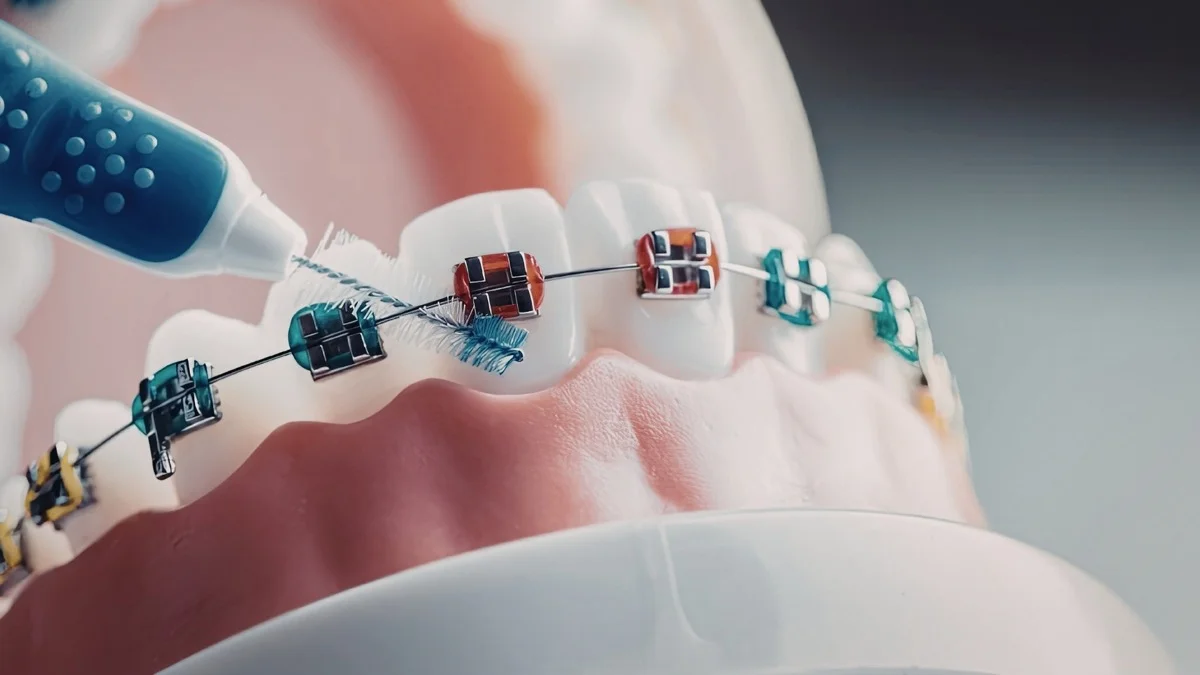
- Interdental brushes – Very helpful for cleaning around brackets and under wires.
- Water flossers – Helpful as an adjunct; they do not fully replace mechanical plaque removal with floss in tight contacts.
Frequency
For most patients, daily flossing (often best at night, after brushing) is the goal. Your orthodontist or hygienist may recommend additional tools depending on your risk for gingivitis or white spot lesions.
If you learn better from video, search for trusted university dental-school demonstrations on flossing with braces—content quality varies, so prefer reputable clinical sources.
Related page: Braces (Fixed Appliances)
References
- Graber LW, Vanarsdall RL, Vig KWL, Huang GJ. Orthodontics: Current Principles and Techniques. 6th ed. Elsevier; 2017. (Oral hygiene during fixed appliance therapy.)
- Chapple ILC, et al. Primary prevention of periodontitis: managing gingivitis. J Clin Periodontol. 2015;42 Suppl 16:S71-S76.
- Socransky SS, Haffajee AD. Dental biofilms in periodontal disease. In: Newman MG, Takei HH, Klokkevold PR, Carranza FA. Carranza's Clinical Periodontology. 12th ed. Saunders; 2015.