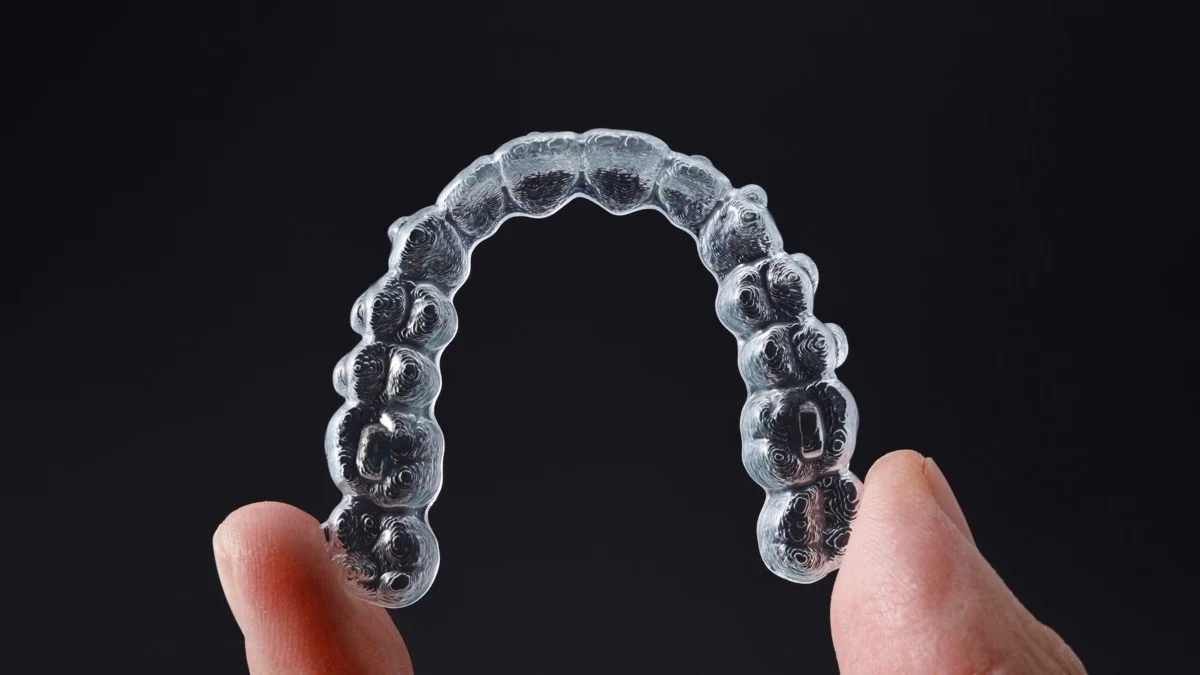
Many people starting clear aligner treatment are surprised to notice small, tooth-colored bumps bonded onto their teeth: “What are these? Wasn’t this treatment supposed to be wire-free?” These little pieces are called attachments, and they are actually one of the cleverest parts of the treatment.
What Is an Attachment?
Attachments are tiny bumps made of tooth-colored composite (filling) material, bonded to the surface of the tooth. They help the aligner “grip” the tooth better. A smooth aligner struggles to move a round, slippery tooth in certain directions; an attachment gives the aligner a point to hold onto, so the force is applied in the right direction.
Why Are They Needed?
Some tooth movements are difficult with the aligner alone. For example:
- Rotating a tooth
- Pulling a tooth up or pushing it down along its vertical axis
- Moving the root of the tooth at a specific angle
For these movements, attachments give the aligner the grip and leverage it needs. The better the attachments are planned, the more effectively the aligner works. Not every patient and not every tooth needs attachments; this depends entirely on the treatment plan, and your orthodontist makes that decision.
Are They Visible?
Because attachments are tooth-colored, they are not very obvious from a distance, though they can be noticed up close. While the aligner is in, they sit under the aligner and are even less conspicuous. When attachments are needed on the front teeth, they are placed as small and as discreetly as possible.
Do They Leave a Mark Afterward?
No. Attachments are removed by the orthodontist when treatment ends, and the tooth surface is polished. When properly removed and polished, they leave no permanent mark or damage on the tooth. Removal is usually painless; you may feel a slight vibration in the tooth.
A Note on Care
Food debris can collect around the edges of attachments, so it is important to pay attention to these areas when brushing. Regular, good oral care prevents staining or decay forming around the attachments.
In short, attachments are the invisible heroes of the clear aligner: small but playing a big role in the success of treatment, and disappearing without a trace once treatment is done.
References
- Rossini G, et al. Efficacy of clear aligners in controlling orthodontic tooth movement: a systematic review. Angle Orthod. 2015;85(5):881-889.
- Proffit WR, Fields HW, Larson B, Sarver DM. Contemporary Orthodontics. 6th ed. Elsevier; 2019.